New Scientist
newscientist.com · EN
- 35posts a week
- 8 Novlast post
- #1in Science
Science news and science articles from New Scientist
Subscribe
Latest posts
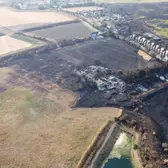
Antipersonnel mines have returned in Ukraine and now threaten the world
3D printing, microcontrollers and drones have enabled the resurgence of antipersonnel mines in the Russia-Ukraine war, making mines deadlier and more accessible
COP climate summits might yet have a useful future – here’s how
No one is expecting COP31 to save the world from climate disaster, but it could provide a small taste of how international meetings can still deliver meaningful progress
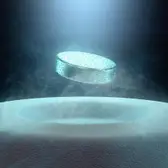
Record-breaking, fast-spinning magnet could help uncover new physics
A magnet barely wider than a human hair is one of the fastest spinning objects ever and could be useful for both fundamental physics experiments and in quantum technology
An unexpected feedback loop may be driving mega heatwaves
Dry soil and high pressure can amplify extreme heat, helping to explain why regions like Europe are suffering record-shattering heatwaves much earlier than climate models predicted
Less than 4 minutes of vigorous exercise a day could halve your dementia risk
Bursts of vigorous physical activity, such as carrying heavy shopping or rushing for the bus, seem to have a significant effect on our brain health and dementia risk
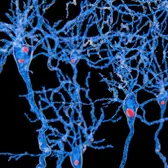
Parkinson’s may be driven by ‘vicious cycle’ that disrupts brain waste drainage
Parkinson's disease is linked to toxic protein clumps and disrupted brain waste removal, which may feed off each other, causing the condition to progress
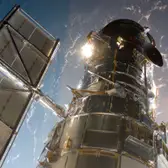
Hubble Space Telescope is falling to Earth – should NASA save it?
The Hubble Space Telescope faces a fiery and fatal re-entry to Earth's atmosphere sometime around 2032, but NASA is asking the private sector for ideas to keep it working
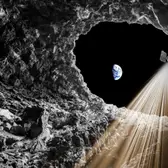
A robot called GIMLI will explore a lunar cave for a future moon base
The race to build a moon base is ramping up. Columnist Robin George Andrews explores how NASA is preparing by sending a cave-hunting robot ahead of humans
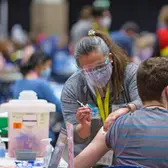
The economic benefits of the covid vaccines may be double what we thought
The global health and economic benefits of the covid-19 vaccines were thought to have reached up to $38 trillion in their first year, but a new analysis suggests $64.3 trillion is a more accurate figure
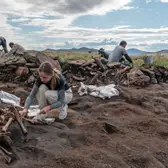
Tomb in Siberia reveals humans were using cannabis 2800 years ago
Psychoactive compounds have been found in a hair from a Scythian tomb in Siberia, providing the earliest direct evidence of cannabis being used as a drug
Google shouldn’t be pressuring schools to use its AI
Google has said schools can’t have access to its search engine without AI, even in schools where AI use is being banned. Columnist Jacob Aron says the tech giant shouldn’t be dictating education policy in this way
Evidence of active volcanoes on Mars may boost chances of finding life
Recent fractures on the surface of Mars and gases detected by an orbiter probe provide some of the strongest evidence yet that the planet is volcanically active
Microplastics may be changing the colour of the Pacific Ocean
Satellites show that the ocean around a gyre of plastic detritus in the Pacific is brightening and changing colour, with the most likely explanation being microplastics suspended in the water column
Marginal oil and gas wells have outsized pollution impact
Low-producing oil and gas wells in the US account for 5 per cent of national oil and gas production but produce 40 per cent of the industry's methane emissions
Stunning collection of prehistoric engravings found in Spanish cave
A close examination of a frequently visited cave wall in Spain has revealed a spectacular assembly of rock art engravings thought to be at least 19,000 years old
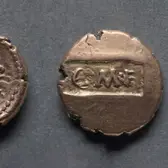
British Iron Age ‘king’ who prompted Roman invasion was probably a woman
Verica, a British ruler who encouraged the Roman emperor Claudius to launch an invasion, may not have been the man historians thought he was
Toothbrush that emits electricity may more effectively prevent gum disease
A toothbrush with bristles that produce electricity as they bend has shown promise for reducing plaque and gum inflammation
Twisteddoodles on scientific equipment training
This week's cartoon from Twisteddoodles
Tom Gauld on our future robot overlords
Tom Gauld's weekly cartoon
A dyslexia diagnosis can help struggling children, but what about the rest?
Children who struggle to read and are diagnosed with dyslexia can get additional help, but those who can't afford a test or don't meet the criteria get left behind. Surely there is a better way?
In the directory since 25 Sept 2026 · last checked 9 Nov 2026 · RSS