Phys.org
phys.org · EN
- 314posts a week
- 9 Novlast post
- #1in Science
Phys.org internet news portal provides the latest news on science including: Physics, Nanotechnology, Life Sciences, Space Science, Earth Science, Environment, Health and Medicine.
Subscribe
Latest posts
Crystals hint at a volcano's ability to erupt
University of Queensland researchers have shown tiny crystals are a window to activity inside volcanoes and could provide clues to when they might erupt.
'Burning': Life under the world's dirtiest skies
On the outskirts of India's capital, a short motorbike ride through the urban area with the world's worst air pollution leaves salesman Kanwar Singh coated in toxic dust.
Despite sacrificing people after catastrophic El Niño flooding, ancient societies were generally peaceful
To understand how societies might react to climate change, archaeologists look at social responses to extreme climate events in the past—and in some places, that included measures as drastic as human sacrifice. Mass ritual sacrifices along the desert coast of northern Peru have been linked to…
A new clinical simulation model strengthens the empowerment and autonomy of nursing staff
To date, many of the methods used in clinical simulation have focused primarily on assessing technical skills and compliance with medical standards, often from a generic, interprofessional perspective. Although technical skills are essential, this approach overlooked key aspects of nursing…
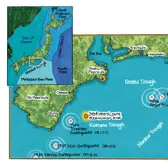
Radiocarbon analysis uncovers possible traces of hidden earthquakes off Japan's coast
Researchers at the University of Tokyo have used a new type of radiocarbon analysis to study a sediment core taken from the Kumano Sea off the coast of Japan. This has revealed multiple "hidden" traces of previously unknown earthquakes in the Nankai Trough, where the country's next megaquake is…
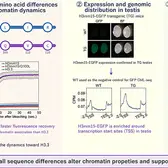
Small histone differences help shape gene regulation during sperm development
Researchers from Kyushu University have found that H3mm15, a histone H3.3 subvariant, contributes to normal sperm development in mice by helping regulate gene expression during spermatogenesis. The findings show that H3mm15 cannot be interchanged with conventional H3.3; although the proteins differ…
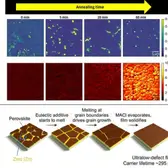
Liquid-assisted crystal growth cuts perovskite defects for efficient solar cells and LEDs
A research team led by professor Seong Sik Shin of the SKKU Advanced Institute of Nanotechnology (SAINT) at Sungkyunkwan University (SKKU), in international collaboration with the Korea Research Institute of Chemical Technology (KRICT), the University of California, San Diego, and Princeton…
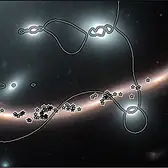
JWST tracks more than 100 magnified stellar events in the Dragon galaxy
Using the James Webb Space Telescope (JWST), a team of astronomers identified 104 magnified stellar events in a galaxy known as the Dragon, located around 6.5 billion light-years away. This discovery more than doubles the previous record of 44 such detections in the same galaxy. Because these kinds…
How space weather powers auroras in the sky and threatens power grids on the ground
An aurora is one of nature's most spectacular light shows: It looks like green or red curtains rippling across the night sky. When viewed from the ground, this colorful display might seem far away and disconnected from anything happening on Earth's surface.
100 buses long: Scientists map one of the world's largest known coral colonies
A huge coral colony stretching more than 1.5 kilometers (0.93 miles) along the outer reef of the Cocos (Keeling) Islands has been identified by researchers, making it one of the largest known coral colonies ever recorded.
New species of ground-dwelling bird, the largest of its kind, identified in same cave as Homo floresiensis
In 2009, researchers working in the Liang Bua cave on Flores Island came across a leg bone. The 190,000–120,000-year-old fossil was identified as a bird bone and set aside. Like many bird bones before it, it was overlooked and left to collect dust.
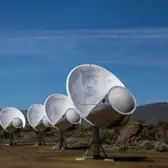
Game theory helps SETI search for alien civilizations
The search for extraterrestrial intelligence (SETI) is mostly concerned with where to look for technosignatures from another civilization. Between 2012 and 2015, SETI's Project Phoenix targeted about 1,000 sun-like stars for signs of intelligent life. But where to look might not be as important as…
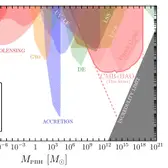
'Stupendously large' primordial black holes ruled out as a dark matter source
Primordial black holes are hypothetical objects that could have formed directly from dense clumps of matter in the very early universe. If they exist, their dramatic origins would set them apart from the black holes we see today, which form when massive stars collapse. Some theories suggest that…
Want to fly to the moon? NASA is looking for new astronauts to help grow its Artemis program
Want to fly to the moon and help build a permanent lunar base? NASA is accepting applications for a new astronaut class that will help grow the Artemis program.
Chimp sanctuary delivers an ape's food by drone amid Florida floods
A Florida chimpanzee sanctuary had to deliver food to one of its 200 apes by drone this week because the property was swamped by heavy rain. But the animals stayed safe, and the water finally was receding significantly on Saturday, the organization said.
Why the tropics lose the most birds when cities expand
Tropical ecosystems are famous for their teeming, exuberant diversity. In fact, the dramatic increase in biodiversity from the poles to the tropics—known as the latitudinal diversity gradient—is pervasive across branches of the tree of life, and fossil evidence suggests it has existed for millennia.
Personalized savings reminders can help boost retirement savings
Private retirement savings are an increasingly important topic in public debate. One popular idea is to phrase savings reminders in one of two ways: either you emphasize what someone stands to lose if they don't save, or you emphasize what they stand to gain if they do. To date, research into which…
Student finds proof of rare wild cat in northern New Mexico
Armed with dozens of motion-sensing cameras, William Grooms spent this past summer documenting wildlife across Carson National Forest in northern New Mexico. It was his first field season collecting photos for a two-year study to understand how forest structure influences biodiversity in the…
The hidden ways insects support animal life—from habitat to health—go way beyond being food
There are at least 14 million insect species on Earth, and they play highly diverse roles in sustaining the natural world. Insects provide many well-known benefits—what scientists often call "ecosystem services." For example, you can thank a bee or a hoverfly for pollinating wildflowers and…
Different text genres help doctoral students adapt their writing to reach new readers
An academic abstract, a blog post and a public outreach article all place different demands on the writer. Readers' prior knowledge varies, as does the purpose of the text and what needs explaining. Mastering one kind of text therefore does not automatically mean being able to write another.



In the directory since 25 Sept 2026 · last checked 9 Nov 2026 · RSS