Scientific American
- 39posts a week
- 24 Septlast post
- #1in Science
Scientific American is the essential guide to the most awe-inspiring advances in science and technology, explaining how they change our understanding of the world and shape our lives.
Subscribe
Latest posts
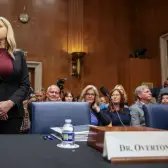
Trump’s FDA nominee Heidi Overton affirms MMR vaccine and mifepristone are safe at crucial Senate hearing
Heidi Overton also said at the hearing on Thursday that Tylenol does not cause autism
OpenAI’s agent hacking Australia is a warning for governments everywhere
In what appears to be a first, an OpenAI agent secretly accessed Australian government health care records during an internal test
Diesel fuel prices are rising—chemistry can help explain why
Diesel prices have almost doubled over the past year, spelling trouble for farmers, truckers and the entire U.S. economy
AI solves 79-year-old math mystery of six-dimensional spheres
Can a six-dimensional sphere be described using imaginary numbers? For decades, experts puzzled over this question. Now an AI has apparently answered it
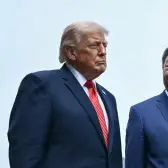
China’s open AI models are testing America’s approach to AI safety
With Donald Trump and Xi Jinping set to discuss AI safety, the growing popularity of Chinese open-weight models highlights the limits of developer-controlled safeguards
Blood test for multiple cancers clears crucial hurdle on track to FDA approval
If approved, the test could help catch cancers early—but more research is still needed, experts say
See the Taurids light up the fall sky with brilliant shooting stars
Lasting from mid-September until mid-November, the Taurid meteor showers are among the longest of the year
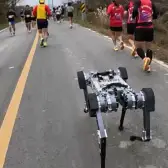
Watch a robot dog run a marathon faster than the average human
The quadrupedal machine finished the course in a solid four hours, 19 minutes and 52 seconds—and on just one battery charge
Is football too dangerous for kids’ brains? These scientists are racing to find out
A new study found that one in four professional football players who died between 2016 and 2021 had CTE—a degenerative brain disease—but what about children who play these sports?
When it comes to ‘poop maxxing,’ are you optimizing or obsessing?
Is it possible to optimize our poop?
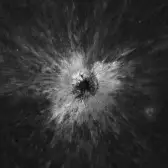
Scientists discover largest new impact crater in the solar system ever—on our moon
The crater, named after geologist and lunar surface expert Tom McGetchin, spans more than two football fields wide
Why mathematicians are hiding research results in zero-knowledge proofs
Google made a major breakthrough in quantum computing. To prevent the results from being misused, the company kept them secret. That backfired
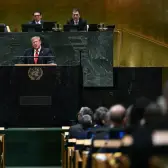
Trump rejects AI regulation, citing parallels with climate change, in U.N. address
The president also said artificial intelligence should be rebranded as “super intelligence”
RFK, Jr., is focusing attention on electromagnetic fields. Here’s what the science says about exposure
The research into how electromagnetic waves and radio frequency radiation influence health has been plagued by low-quality studies
This year’s El Niño just broke another sobering record
“This is probably going to be the superlative El Niño event of our lives so far,” a climate scientist says
Mathematicians use AI to find mysterious symmetries, solving decades-old problem
In parallel, a race by amateurs and mathematicians has found all 25,000 cases of one “inverse Galois problem”
NASA Goddard’s shrinking workforce could stifle future space missions, experts say
2025 was a brutal year of budget cuts and workforce attrition at NASA’s Goddard Space Flight Center, the home base for the Nancy Grace Roman Space Telescope. Experts worry Goddard—and NASA’s space science—may never recover
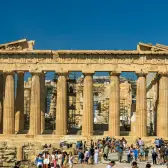
Mathematician reveals the truth behind the Parthenon’s optical illusion
The Parthenon sits atop a platform that is curved into a subtle hill shape that some say makes the structure appear straighter—but is that true?
What a Trump order to put political appointees in charge of NIH funding would mean for science
Advocates and scientists warn that giving political appointees power over research grants would “upend” U.S. science
Did OpenAI solve the wrong Navier-Stokes problem?
OpenAI’s proof seems eligible for a $1-million prize—but only by using a controversial loophole


In the directory since 25 Sept 2026 · last checked 25 Sept 2026 · RSS