The Marginalian
themarginalian.org · EN
- 15posts a week
- 24 Septlast post
- #1in Books
Marginalia on our search for meaning.
Subscribe
Latest posts
How to Fall in Love Better: A Field Guide to Enlightened Enchantment
Enchantment, J.R.R. Tolkien believed, is “as necessary for the health and complete functioning of the Human as is sunlight for physical life.” But enchantment is a story we tell ourselves that tells us back to ourselves, and like every story, it can be true or false. Love is the most powerful…
Emerson on How to Trust Yourself
"It is easy in solitude to live after our own; but the great man is he who in the midst of the crowd keeps with perfect sweetness the independence of solitude."
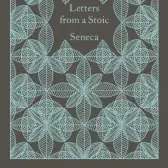
A Stoic’s Key to Peace of Mind: Seneca on the Antidote to Anxiety
"There are more things ... likely to frighten us than there are to crush us; we suffer more often in imagination than in reality."
The Three Elements of the Good Life
To be a true person is to be entirely oneself in every circumstance, with all the courage and vulnerability this requires. And yet because a person is a confederacy of parts often at odds and sometimes at war with each other, being true is not a pledge to be a paragon of cohesion, predictable and…
How to Be a Poet: Elizabeth Alexander on the Yin-Yang of Connection and Contradiction
“The poets (by which I mean all artists) are finally the only people who know the truth about us,” James Baldwin wrote. “Soldiers don’t. Statesmen don’t. Priests don’t. Union leaders don’t. Only poets.” No matter how slant they may tell it, that truth tells us back to ourselves, helps us tell each…
Dostoyevsky, Just After His Death Sentence Was Repealed, on the Meaning of Life
"To be a human being among people and to remain one forever, no matter in what circumstances, not to grow despondent and not to lose heart — that’s what life is all about, that's its task."
The Vampire Problem: The Paradoxical Psychology of Why It Is So Hard to Change
"Many of [life's] big decisions involve choices to have experiences that teach us things we cannot know about from any other source but the experience itself."
How to Hold the Darkness: Notes on Living Through Uncertainty
There are times in life when the continent of certainty parts underfoot and, as the ash cloud of the old world rains darkness upon us, we are asked to swim in the rivers of lava that will make the new. “Almost it would appear that it is useless in such confusion to ask,” wrote Virginia Woolf of…
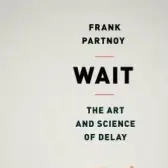
The Science of Waiting and the Art of Delay
Exploring the intersection of time and decision-making to shine a light on what it means to be human.
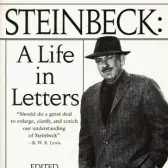
Steinbeck and the Difficult Art of the Friend Breakup
"I can’t consider you a friend when out of every contact there comes some intentionally wounding thing."
Are You Working: In Defense of the Invisible Labors of Creativitiy
Once, at the gym with a physicist friend, I was struck by how no one else in the room had any idea that while she was sweating on the treadmill with a blank stare into space, she was doing advanced mathematics working out the logic of black holes. Another time, on the train with a poet friend, none…
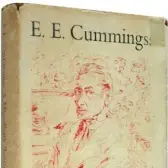
The Courage to Be Yourself: E.E. Cummings on Art, Life, and Being Unafraid to Feel
"To be nobody-but-yourself — in a world which is doing its best, night and day, to make you everybody else — means to fight the hardest battle which any human being can fight."
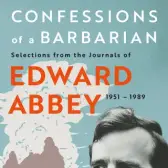
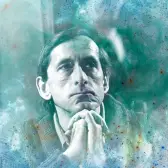
Edward Abbey on How to Live and How to Die
The summer after graduating high school, knowing he would face conscription into the military as soon as his eighteenth birthday arrived, Edward Abbey (January 29, 1927–March 14, 1989) set out to get to know the land he was being asked to die for. He hitchhiked and hopped freight trains, rode in…
Against the Cartesian Myth of Work/Life Balance: André Gregory’s Extraordinary Letter to Richard Avedon about the Nature of Creativity
Half a millennium into our recovery from the civilizational wound Descartes inflicted by severing the body and the mind, we are bleeding with a Cartesian cleft of our own making — the damaging divide between life and work. The notion of a “workaholic,” often worn as a badge on the lapel of the…
The Stoic Key to Living with Presence: Seneca on Time Spent vs. Saved vs. Wasted
"Lay hold of to-day’s task, and you will not need to depend so much upon to-morrow’s. While we are postponing, life speeds by. Nothing... is ours, except time."
On Losing a Parent
We spend our lives mastering the art of losing. Our necessary losses shape us; the unnecessary, senseless, devastating losses bend our shape to test our breaking point. We can lose people to life — to conflict, to confusion, to the consequences of their trauma — losses painful precisely because it…
Actuality vs. Possibility and How to Hear the Signal of Your Life
Sitting atop a Spanish mesa one sweltering August night, watching the Perseid meteor showers streak the sky with the debris of a comet burning through the atmosphere against the backdrop of a billion dead stars whose signal light is only now reaching us, I found myself trembling with the parallel…
The Canon of Solitude: 200 Years of Great Writers, Artists, and Scientists on the Creative and Spiritual Rewards of Fertile Aloneness
There is a silence at the center of each person — an untrammeled space where the inner voice grows free to speak. That space expands in solitude. To create anything — a poem, a painting, a theorem — is to find the voice in the silence that has something to say to the world. In solitude, we may…
How to Promise and How to Keep Promises from Breaking
We are creatures fragmentary but indivisible, each of us a whole that is always simpler than its parts, but complicated by the struggle for a living unison between them. Nothing betrays our partitions more plainly than our promises. False promises — those people make not intending to keep — are…
J.R.R. Tolkien on How to Fall in Love with Life
In 1964, Pantheon Books invited J.R.R. Tolkien (January 3, 1892–September 2, 1973) to write an introduction to George MacDonald’s The Golden Key, which he had praised in Tree and Leaf — the small, splendid essay collection that gave us his uncommonly insightful meditation on fairy tales, the…
In the directory since 25 Sept 2026 · last checked 25 Sept 2026 · RSS