World History Encyclopedia
worldhistory.org · EN
- 10posts a week
- 24 Septlast post
- #4in History
The free online history encyclopedia with fact-checked articles, images, videos, maps, timelines and more; operated as a non-profit organization.
Subscribe
Latest posts
WWII's Pacific War: A Collection of Resources
This collection of resources presents the Pacific theatre of the Second World War (1939-45), which saw the expansion of the Japanese Empire before the USA was brought into the conflict following the Japanese attack on Pearl Harbor in December 1941. US and Allied forces steadily liberated Pacific…
AP World History Unit 3: Land-Based Empires (c. 1450–1750)
This collection gathers articles, definitions, and maps covering the empires, rulers, and belief systems related to Unit 3: Land-Based Empires of the AP® World History: Modern curriculum. This collection is a single resource for teachers, providing the materials needed to explore how rulers across…
James Buchanan: The President Who Lost the Union
James Buchanan (1791-1868) was an American politician who served as the fifteenth president of the United States. He took office during a time of great crisis, when the country was divided along sectional lines over the issue of slavery; his unwelcome involvement in the Dred Scott decision and the…
A Supervisor's Advice to a Young Scribe: Words of Wisdom or Satire?
A Supervisor's Advice to a Young Scribe is a Sumerian composition relating a dialogue between an elder scribe and a young graduate from his school. The piece is dated to the Old Babylonian period (circa 1894-1595 BCE) and, although originally interpreted as an accurate depiction of the life of a…
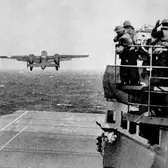
Pacific War: The Defeat of Japan in WWII
The Pacific War concerned the theatre of the Second World War (1939-45) fought in the Pacific Ocean and eastern parts of Asia between Japan and the United States and its allies. Japan had expanded its empire in the region throughout the 1930s, but the sneak attack on the US base at Pearl Harbor…
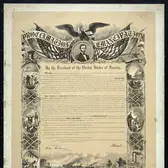
Emancipation Proclamation: Lincoln's Call for Freedom
The Emancipation Proclamation was an executive order issued by US President Abraham Lincoln on 1 January 1863, at the height of the American Civil War (1861-1865). It proclaimed that "all persons held in bondage" within the rebellious Confederate States "are, and henceforward, shall be free." The…
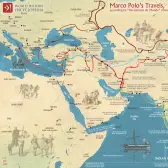
AP World History Unit 2: Networks of Exchange (c. 1200-1450)
This collection gathers articles, definitions, and maps covering the trade routes, travelers, and networks of exchange related to Unit 2: Networks of Exchange of the AP® World History: Modern curriculum. In here, you will find resources for teachers, providing the materials needed to explore how…
AP World History Unit 1: The Global Tapestry (c. 1200-1450)
This collection gathers articles, definitions, and maps covering the states, cultures, and events related to Unit 1: The Global Tapestry of the AP® World History: Modern curriculum. This collection is a single resource for teachers, providing the materials needed to explore how geographically…
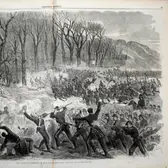
Battle of Mill Springs: The First Union Victory in the Western Theater
The Battle of Mill Springs (19 January 1862) was the first Union victory in the Western theater of the American Civil War and propelled Union General George H. Thomas to fame. The battle is known by many names owing to the area in Pulaski County and Wayne County, Kentucky, in which it was fought…
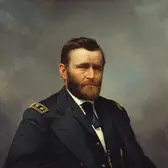
Ulysses S. Grant: The General Who Won the American Civil War
Ulysses S. Grant (1822-1885) was a Union general in the American Civil War and, later, the 18th president of the United States of America. He is generally regarded as the most effective Civil War commander, whose refusal to retreat after engagements contributed significantly to the Union victory in…
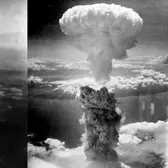
Why Were Hiroshima & Nagasaki Bombed in WWII?
The decision to drop the atomic bomb in August 1945 was taken to avoid further Allied casualties in the Pacific War by forcing Japan into an immediate surrender. Another reason was, as the victors jostled for control of the broken empires of the losers of the Second World War (1939-45), to…
The Bombing of Tokyo in WWII: How Napalm Firestorms Destroyed a City
The systematic bombing of Tokyo by US aircraft in repeated raids during the Second World War (1939-45) was intended to force Japan's surrender. The dropping of thousands of incendiary bombs in March 1945 created a firestorm that killed at least 87,000 people. Tokyo, with its myriad of industrial…
The Debate Between Sheep and Grain: A Sumerian Argument Between Animal Husbandry & Agriculture
The Debate Between Sheep and Grain (circa 2000 BCE) is one of the best-known Sumerian literary debates in a genre that was popular entertainment by the late 3rd millennium BCE. In this piece, personifications of grain and sheep argue which is more important, with grain judged the winner because…
Korean War: How the Cold War Became a Hot War
The Korean War was a Cold War conflict that took place between North and South Korea from 1950 to 1953. It pitted US-led United Nations (UN) forces against the communist bloc supported by the Soviet Union and China, and it is considered the first armed conflict between the capitalist and socialist…
G. H. Thomas's Account of the Battle of Mill Springs: Excerpts From the Official Action Report
At the Battle of Mill Springs (19 January 1862) in Kentucky, Union Brigadier General George H. Thomas had originally planned to strike first, advancing from Logan's Crossroads to launch an assault on the Confederate encampment at Beech Grove near the Cumberland River, ten miles (16 km) from his…
Franklin Pierce: The Tragic US President
Franklin Pierce (1804-1869) was an American lawyer and politician who served as the fourteenth president of the United States. An unremarkable politician prior to his election, his presidency was marred by the sectional crisis over the issue of slavery. His support of the Kansas-Nebraska Act led to…
The Home of the Fish: A Sumerian Poem of a Trap or a Welcome
The Home of the Fish is a Sumerian poetic monologue, most likely from the Ur III period (circa 2112 to circa 2004 BCE), in which the speaker tries to coax various fish into a newly built home. The meaning of the poem depends on whether the speaker is sincere in his or her invitation or has actually…
Manhattan Project: How the Atomic Bomb Was Built
The Manhattan Project was the code name for the secret US-led programme to develop an atomic bomb during the Second World War (1939-45). Hugely expensive and employing the best scientific minds from Europe and the United States, the project was successful. After a single test, two bombs were…
Almourol Castle: Island Fortress of the Knights Templar
Almourol Castle in Portugal was built on a 310-meter-long and 75-meter-wide granite islet in the middle of the Tagus River. Earlier Roman and Moorish structures were completely remodelled in 1171 by the Knights Templar and became part of the Tagus defensive line, designed to control river…
George H. Thomas: The Underrated Hero of the Union
George H. Thomas (1816 to 1870) was a Union general in the American Civil War who first came to national attention after his victory at the Battle of Mill Springs (19 January 1862) in Kentucky, the first Union victory in the Western Theater of the war. After Mill Springs, Thomas' winning streak…
In the directory since 25 Sept 2026 · last checked 25 Sept 2026 · RSS