Live Science
livescience.com · EN
- 39posts a week
- 9 Novlast post
- #1in Science
All the latest content from the Live Science team
Subscribe
Latest posts
Terracotta cockerel vase: A 2,600-year-old Etruscan inkwell featuring 26 letters of the undeciphered ancient language
This tiny inkwell contains an alphabetic inscription in ancient Etruscan, a language that has never been fully decoded.
Would you learn to lucid dream if you could?
Neuroscientists say people can be "trained" to recognize when they're dreaming — in other words, lucid dreaming may be an acquirable skill.
Rare fifth-century burials of Germanic chieftains with dazzling weapons and warhorses discovered in France
Archaeologists found a small cemetery full of high-status burials, two of which may be the graves of Germanic chieftains.
NASA's destroyed Swift Observatory took one of the best-ever photos of bright Andromeda
NASA's Swift Observatory went out in a blaze of glory this week, but it left behind millions of images of the universe that could fuel discoveries for decades.
How frequently did Viking women fight in battle?
The Vikings are famous for being warriors, but how frequently did Viking women take part in battles?
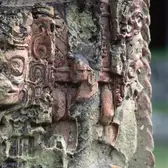
The Maya used so much red paint that they poisoned their water with mercury, mud sediments reveal
Researchers found extreme levels of mercury in sediment cores in Mexico — and it’s all because the Maya loved red paint.
Tectonic forces near Japan helped fuel the formation of the Grand Canyon
A double subduction zone off the coast of Japan caused rifting halfway around the world to accelerate, fueling the formation of some of North America's most iconic features.
Women often get cold more easily than men — a mouse study offers hints why
A new study points to testosterone and proteins in the skin as reasons why males and females experience temperatures differently.
I almost died from flu. My life didn't go back to normal after.
Madi Allen was 12 years old when she almost died from flu. Now 28, she shared her story with Live Science.
Why do most cats hate it when you touch their belly, feet or tail?
The surest way to get a scratch from a feline is to go for a forbidden tummy rub. But why do cats hate being touched on their bellies?
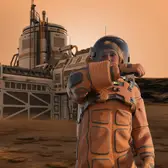
'Life is too brief to leave this planet': Live Science readers share whether they'd go to Mars, despite health risks
Live Science readers respond to a recent poll about whether they'd visit the Red Planet even with potential health risks.
50% of long COVID patients show improvement in 3 years — but the condition tends to linger in those with this subtype
About half of people with long COVID see meaningful improvement in their symptoms after three years, a new study found.
Perfectly preserved owl fossil from 47 million years ago could help to solve a major evolutionary mystery
A stunning fossil owl from Germany that has its last meal preserved in its stomach helped researchers to narrow down the time when these birds mostly became active at night.
Scientists removed the glare from a James Webb telescope image — and unmasked a hidden planet
Using machine learning, astronomers developed a new way of looking at James Webb telescope data that allows far-off planets to emerge from their star's glare.
Gigantic chasm on Mars is still tectonically active
New research shows that a powerful 2021 marsquake emanating from Valles Marineris — the largest canyon in the solar system — was triggered by unexpected movement in a fault line deep below the gigantic structure, revealing that tectonic activity can still occur on geologically "dead" worlds.
2,800-year-old tomb in Siberia has evidence of the earliest use of cannabis — possibly as a way to calm human sacrifice victims
Seeds found in an ancient grave and chemical compounds discovered in mummy hair have revealed people got high on marijuana 2,800 years ago.
Cryptic padlock from a 400-year-old shipwreck finally opened — but it leaves a mystery
Researchers used CT scans to crack a 400-year-old code and open a mysterious padlock that washed up in Wales with the Ann Francis treasure hoard.
1,600-year-old burial holds remains of man infected with a 'very rare' strain of leprosy in Germany
A high-status burial surprised archaeologists when they discovered leprosy in a man's bones from the fifth century.
'We’re looking at how a bear sees the world': From forest trails to 'Sims for Bears', researchers are learning how grizzlies navigate a fragmented wilderness
Scientists in the U.S. and Canada are decoding grizzly bears' behavior to learn how they navigate a human-dominated world. What they find could build a safer future for both species.
7 stunning Weather Photographer of the Year photos that capture the beauty and power of our planet
From dramatic lightning strikes to foreboding storm clouds, these stunning photographs capture the beauty, power and unpredictability of our planet's weather.



In the directory since 25 Sept 2026 · last checked 9 Nov 2026 · RSS