Topics /
Best Astronomy RSS Feeds in 2026
3 feeds from 3 sites tagged “astronomy”, ranked by how many people follow each one in their readers, how often it posts and how recently. The list moves as the feeds are checked, every few hours at least.
- 1Latest from Space.comAll the latest content from the Space.com teamLast post 9 Nov
- 2Live ScienceAll the latest content from the Live Science teamLast post 8 Nov
- 3CosmoInsiderAstronomy, planetary science and space exploration with context and traceable sources.Last post 6 Nov
Follow the whole topic
The newest astronomy posts from across the directory as one feed, for any reader:
Latest astronomy posts
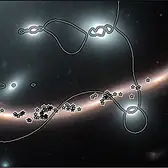
JWST tracks more than 100 magnified stellar events in the Dragon galaxy
Using the James Webb Space Telescope (JWST), a team of astronomers identified 104 magnified stellar events in a galaxy known as the Dragon, located around 6.5 billion light-years away. This discovery more than doubles the previous record of 44 such detections in the same galaxy. Because these kinds…
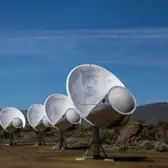
Game theory helps SETI search for alien civilizations
The search for extraterrestrial intelligence (SETI) is mostly concerned with where to look for technosignatures from another civilization. Between 2012 and 2015, SETI's Project Phoenix targeted about 1,000 sun-like stars for signs of intelligent life. But where to look might not be as important as…
NASA's destroyed Swift Observatory took one of the best-ever photos of bright Andromeda
NASA's Swift Observatory went out in a blaze of glory this week, but it left behind millions of images of the universe that could fuel discoveries for decades.
‘Mind-blowing’: dark-sky fans gather on Exmoor to see what light pollution hides
The UK is 14th most light-polluted country, but in south-west England the veil is lifted at the dark skies festival “It’s just mind-blowing,” says the astronomer and teacher Jo Richardson. She is standing in Exmoor national park talking about Saturn, the first planet she ever saw through a…
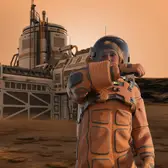
'Life is too brief to leave this planet': Live Science readers share whether they'd go to Mars, despite health risks
Live Science readers respond to a recent poll about whether they'd visit the Red Planet even with potential health risks.
Giant exoplanet emerges from the dark when the James Webb Space Telescope turns out the starlight
Astronomers have filtered out starlight from James Webb Space Telescope observations to see a giant exoplanet emerge in the darkness.
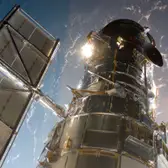
Hubble Space Telescope is falling to Earth – should NASA save it?
The Hubble Space Telescope faces a fiery and fatal re-entry to Earth's atmosphere sometime around 2032, but NASA is asking the private sector for ideas to keep it working
4-billion-year-old 'Rosetta Stone' found in Sahara Desert could unlock the secret history of water on Mars
A rock discovered in the Sahara Desert formed more than 4.1 billion years ago, making it one of the oldest Martian meteorites ever found. The ancient space rock offers a rare glimpse into the formation of Mars' early crust and its possible interaction with water.
NASA unveils the X-70 Fractal, a modular experimental aircraft for testing new flight technologies
Announced on November 4 at Kennedy Space Center, the X-70 Fractal will be able to quickly change its internal and external experimental payloads. NASA projects that it will reach Mach 0.75, operate at up to 45,000 feet, and have a range of more than 1,500 nautical miles.
Software squeezes more data out of Webb Telescope for imaging exoplanets
Software optimizes a physical model of the telescope to reduce noise.
Software squeezes more data out of Webb Telescope for imaging exoplanets
Software optimizes a physical model of the telescope to reduce noise.
7,500 Light-Years From Earth, A Cat’s Head Appears
A beautiful new NASA image of the Carina Nebula The post 7,500 Light-Years From Earth, A Cat’s Head Appears appeared first on Nautilus .
The night-sky image so incredible the NZ man behind it has been accused of using AI
Brendan Larsen spent hours taking hundreds of photographs of the sky over a mountain in New Zealand A photograph showing thousands of satellites cross-hatching the night sky over New Zealand appeared so extraordinary the astrophotographer who captured it is fighting accusations it was created by…
Why large dogs age faster than small ones, and other October research highlights
Plus invisible tattoos, medieval skeleton gets an ID, trapping a single antimatter particle, and more.
Research roundup: 6 cool science stories we almost missed
Plus invisible tattoos, medieval skeleton gets an ID, trapping a single antimatter particle, and more.
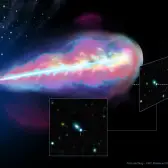
A Collapsing Star Produced an Afterglow Brighter Than Its Galaxy
“The explosion packed roughly a billion years of the sun’s energy output into a pencil-thin beam” The post A Collapsing Star Produced an Afterglow Brighter Than Its Galaxy appeared first on Nautilus .
A job that changed me: I ran observatory tours as a student. An eight-year-old’s question taught me two important lessons
I thought the explanation I’d given about black holes was family-friendly; but after what she had said, I had to rethink my examples Read more in the a job that changed me series In the first year of my science degree, I was fortunate to land a job as an astronomy guide at the Sydney Observatory…
Webb Reveals Warm Dust Structures in the Cat's Head Nebula
The Webb image shows how warm dust emission and carbonaceous molecules outline globules and filaments within the Cat's Head Nebula. Published on October 29, 2026 alongside Hubble and Webb near‑infrared views, it offers a complementary perspective of this star‑forming zone located in the Carina…
It’s snow time: the best winter activity holidays in Europe for non-skiers
From husky sledding and chasing the northern lights in Lapland to bear-spotting in Transylvania, here’s our pick of wild and magical snowy breaks in Europe At Ruka, the first skiers of the year slalomed down the slopes on 2 October. Just inside the Arctic Circle, Ruka’s long snow-sure season and…
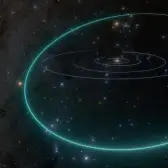
This Halloween, amateur astronomers may be in for a dwarf planet treat
The Vera Rubin Observatory is shedding new light on the faraway regions by Neptune and beyond, including possible solar system building blocks.