Statistical Modeling, Causal Inference, and Social Science
- 12posts a week
- 8 Novlast post
- #3in Data Science
Subscribe
Latest posts
“Causal Effects Versus Causal Mechanisms: Two Traditions With Different Requirements and Contributions Towards Causal Understanding”
Following up on our post from last year on the importance of mechanistic models, Jim Grace points to his above-titled paper in Ecology Letters. From the abstract: When methods are described as ‘causal,’ emphasis is increasingly placed on statistical techniques … Continue reading →
2026 compared to other dramatic midterm election reversals of the past half-century
As I said a few days ago, you don’t me anymore to do your fancy post-election data analyses. So instead I can offer speculation (Could the 2026 election results lead to a decrease in political polarization?) and meta-commentary (NYT columnist … Continue reading →
Constructing a latent-variable model to fit measurement data: A Stan story, part 1
This simulation is a little different than what came before. For my earlier post I simulated hypothetical future data from the beauty-and-sex-ratio study. For my new post I’m simulating data from a hypothetical strong relationship between two variables. Here I’m … Continue reading →
Could the 2026 election results lead to a decrease in political polarization?
I have some hope, for the following reasons: 1. The incoming Democrats in Congress include some centrists and some on the left. Mix them in with the ones who are already there, and we can expect divisions on general ideological … Continue reading →
“So in that sense the silly statistics in the paper is no big deal, it serves as a sort of rhetorical flourish?”
Richard Feldman writes: I’m a long-time reader and sometimes commenter on the blog. I’ve learned a lot – and been entertained – by many of the posts. A paper was just published in Science on a theme that is potentially … Continue reading →
Analysis of tonight’s election results (and why I don’t need to do it anymore)
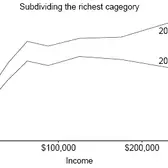
Back in the day, I would do a post-election post, summarizing information from the election outcomes and exit polls. For example, after the 2008 election: As with previous Republican candidates, McCain did better among the rich than the poor:
Survey Statistics: Times/Siena Polls and Times Voter Trends
Yesterday Andrew wrote about Alan Zaslavsky, who recently passed. This is typical of his work in that it was innovative, with applied importance, and understated. As Fan Li quoted, Alan was “the best applied statistician on earth”. I’ll write more … Continue reading →
Election Day special: Why it can be rational to vote
I think I can best do my civic duty by running this one every Election Day, just like Art Buchwald on Thanksgiving. . . . With a national election coming up, and with the publicity at its maximum, now is … Continue reading →
Alan Zaslavsky
We had a wonderful cohort of students in the statistics Ph.D. program at Harvard in the late 1980s, and I learned so much, not just from the faculty and from my contemporaries in the program, but also from those who … Continue reading →
Science is not naturally aligned
This is Jessica. Last spring I wrote about how some AI for science rhetoric is unrealistically optimistic about how much faster science will progress now that LLM agents can tackle problems fairly independently. The vision is that we can just … Continue reading →
Most legislative districts are so close that there’s essentially no practical electoral benefit from moderation. But there is the argument that if you run a lot of extremists all over the country, that this will make things harder for your party’s moderates in the few swing states and swing district
Peter Dorman writes: Have you seen this? The debate is interesting in general, but I think you would be especially interested in the empirical claims about issue polls and their relationship to electoral outcomes. I [Dorman] have a concern that … Continue reading →
“Evolutionary psychology hypotheses are testable and falsifiable.”
Eric Charnov points to this recent article by William Costello et al., which begins: The field of evolutionary psychology has often been the target of allegations that its hypotheses are unfalsifiable. . . . We . . . present evidence … Continue reading →
Problems with the “Do no harm” principle in the presence of uncertainty
In a paper entitled, Counterfactual Harm: A Counter-argument, Amit Sawant and Mats Stensrud write: A core principle in medicine is non-maleficence, often equated with “do no harm.” A formal definition of harm based on counterfactual reasoning has been proposed and … Continue reading →
This guy has a transformer-based election forecasting model
Harvey Olden writes: I’ve developed an election prediction model based on a transformer architecture; I thought you might find it interesting. The model will update its information automatically in the run-up to the midterm elections; you can also click on … Continue reading →
Stochastic potential outcomes: A discussion with Ang Yu and Jonas Mikhaeil
Ang Yu read the Russian Roulette paper (by Jonas Mikhaeil and me) and wrote: I was wondering whether it might be useful to alternatively frame the problem in terms of stochastic versus deterministic interventions as opposed to potential outcomes. I … Continue reading →
R-hat, August 1990
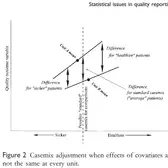
I came up with R-hat when working at Bell Labs in the summer of 1990. Here’s the story, and below is the first version of the paper, exactly as I wrote it. First, here are some recent things to read … Continue reading →
“In the run-up to the trial, the brothers conducted an elaborate public relations campaign . . . also arranged for payments to influencers and podcasters who made sympathetic social media posts about the case.”
From a news article about some recently-convicted rapists: Three brothers who ran a yearslong conspiracy to traffic women and girls for sex were sentenced to 30 years each in prison on Tuesday . . . The brothers, more accustomed to … Continue reading →
Bou-Rabee’s breakthrough paper, “Persistence Pays: Square-root condition-number dependence for Metropolis-adjusted kinetic Langevin Monte Carlo …”
This one’s a big deal. Bou-Rabee, Nawaf. 2026. Persistence Pays: Square-root condition-number dependence for Metropolis-adjusted kinetic Langevin Monte Carlo with a non-reversibly updated accept/reject uniform. arXiv 2610.35781. Abstract: We prove accelerated mixing for a Metropolis-adjusted…
Tension vs. excitement during NBA games
This is related to our discussion of the martingale property of calibrated probability forecasts. Jeremy Lu writes: I’m a former student of Dr. Jennifer Hill at NYU and have been keeping up with your blog. I noticed some people write … Continue reading →
We interrupt our usual programming to inform you that I was never hired by Facebook to do a hit job on Jonathan Haidt.
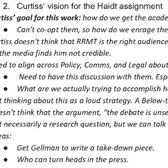
So. I got some emails today from various people, pointing me to this item from a court filing: From another source, this seems to be the story: Meta internally set a goal to “get the academic community to disavow” and … Continue reading →
In the directory since 25 Sept 2026 · last checked 9 Nov 2026 · RSS